Xeomin VS Botox: What Is The Difference?
Xeomin VS Botox: What Is The Difference?
Xeomin and Botox are two popular cosmetic procedures that many consider. Both treatments aim to redu...
Learn more
This October, save on Botox, Fillers, Microneedling, CO2 CoolPeel and The Perfect Derma Peel! – Book Now!


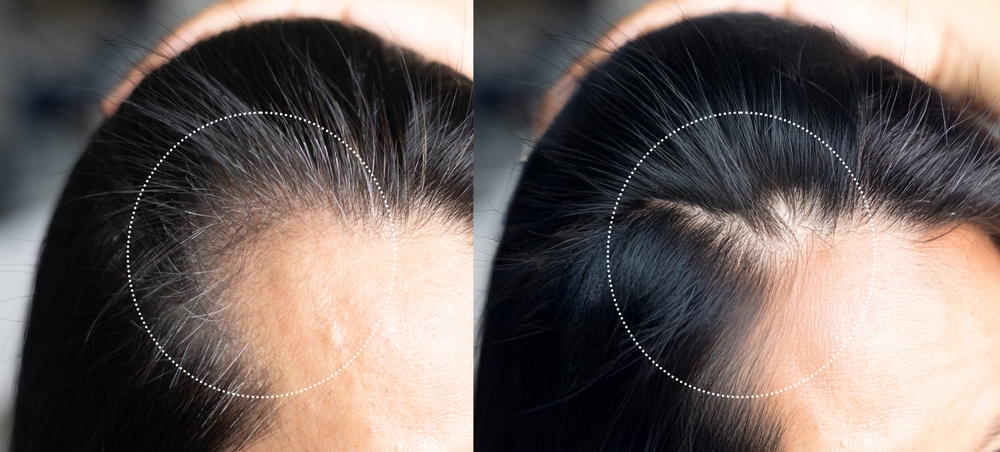
Hair loss does not always begin with a bald patch or a large amount of hair in the shower. Knowing what hair loss looks like can help you spot smaller changes first. You may notice a wider part, less fullness in your ponytail, or a changing hairline. More scalp may also show through at the crown. Some types of hair loss happen slowly. The change may be easier to see when you compare photos taken months apart.
Normal shedding can look worrying too. Most people lose some hair every day as older strands finish their growth cycle. The key difference is whether your overall hair density stays about the same or starts to decrease over time.
At True Jewel Cosmetic Center, we offer PRP hair restoration for suitable candidates with thinning hair. This guide explains what hair loss looks like and how normal shedding can appear. It also covers signs worth discussing with a medical professional.
Hair loss can show up in several ways, and the pattern often gives useful clues about what is happening.
Seeing one extra hair on your brush does not tell you much by itself. Changes in density, shape, or pattern over weeks and months are usually more useful.
Normal hair shedding is part of the hair growth cycle. The American Academy of Dermatology says it is normal to shed about 50 to 100 hairs a day. You may see them on your pillow, in the shower, or caught in your brush.
That number is only a rough guide because most people do not count individual hairs. Wash frequency, hair length, and styling can change how much shed hair you notice at one time. Someone who washes their hair every few days may see more strands in the shower than someone who washes daily.
What normal hair loss looks like is often more about what stays the same. Your overall density stays fairly stable. Your part and ponytail should not keep changing over time.
Extra shedding can happen after stress on the body. Illness, surgery, childbirth, major weight loss, high fever, or a stressful event can push more hairs into a resting phase. The extra shedding often begins a few months later.
This type of shedding is called telogen effluvium. It can look dramatic because many hairs may come out across the whole scalp. In many cases, the hair cycle settles again once the trigger has passed. If heavy shedding continues or your overall density changes, a medical evaluation can help identify the cause.
Hair loss can change the part, hairline, density, or overall shape of your hair. Looking at several signs together can give you a clearer picture than counting loose strands.
One of the first signs of pattern hair loss in women is often a wider part. The scalp becomes easier to see through the hair, especially under bright light or in overhead photos. Your front hairline may stay fairly stable even as the middle part looks broader. Day-to-day change can be hard to notice, so photos taken in similar light can make it clearer. A part that keeps widening over several months is worth having assessed.
Hair loss does not always create a clear bald area. Sometimes the first clue is a ponytail that feels smaller or needs an extra turn of the hair tie. The hair may still cover the whole scalp, but there are fewer strands adding bulk.
This is another example of what hair loss looks like before a bald spot appears. Hair breakage can make a ponytail feel thinner too, so an assessment can help tell the difference.
Pattern hair loss in men often starts at the temples or front hairline. The corners may move back slowly, or the hairline may form a more noticeable M shape. A thinner area can also develop at the crown. Old photos can make early changes easier to see, especially around the temples. Women can have hairline changes too, though a widening part and diffuse thinning are more common.
Some types of hair loss create clear patches rather than gradual thinning. A round or oval bald patch can appear on the scalp, beard area, or another part of the body. Alopecia areata is one possible cause.
Patchy loss should be assessed rather than guessed at from appearance alone. Fungal infections, pulling, scarring conditions, and other causes can create similar areas. Redness, scaling, soreness, or broken hairs can provide useful clues.
Diffuse thinning means density decreases across a larger part of the scalp instead of one clear patch. More scalp may show through under strong light, and the hair can feel flatter or less full.
This pattern can occur with temporary shedding, female pattern hair loss, nutritional problems, thyroid conditions, medications, and other causes. Appearance alone cannot confirm the reason. To understand what hair loss looks like on your own scalp, compare several areas over time. Check your part, crown, hairline, and overall density.
Talk with a healthcare professional if you see lower density, a growing bald patch, or a receding hairline. Ongoing heavy shedding also deserves attention. Pain, strong itching, redness, scaling, or sores may point to a scalp condition that needs treatment.
Hair loss has many possible causes, including genetics, hormones, illness, nutrition, medications, stress, and hair care practices. Finding the cause helps guide the next step.
PRP, or platelet-rich plasma, is made from a small sample of your own blood. The blood is spun in a centrifuge so the platelet-rich portion can be separated. That concentrated plasma is then injected into selected areas of the scalp.
At True Jewel Cosmetic Center, we use PRP hair restoration for suitable patients with hair thinning or hair loss. Research suggests PRP can improve hair density in some people with androgenetic alopecia, also called pattern hair loss. Results vary, and PRP does not treat every cause of hair loss.
Visible changes take time because hair grows in cycles. Changes may become visible over about four to six months. We may recommend repeat sessions or maintenance for some people.
PRP may be considered when hair follicles are still present but the hair has become thinner or less dense. Pattern hair loss is one area where research has found potential benefit. Earlier treatment can be useful because long-standing areas with little or no active hair growth may respond less well.
We also review your health history before recommending PRP. Active scalp infection, some blood or bleeding disorders, and certain medicines can affect treatment. Hair loss linked to another medical problem may need that cause treated first.
PRP treatment aims to support hair density and growth in areas where follicles are still active. The change is gradual rather than immediate. New growth also takes time to become long enough and thick enough to notice in photos.
Photos taken in the same light, with the same hairstyle and angle, can help track changes. Part width and scalp coverage are often more useful than checking loose hairs each day. We can discuss the type of thinning you have and what change may be realistic before treatment begins.
Knowing what hair loss looks like can make gradual thinning easier to recognize. A widening part, shrinking ponytail, receding hairline, patchy loss, or more visible scalp can all be useful clues. Normal shedding can still leave plenty of hair in the shower without causing a lasting drop in density.
The next step is finding out why the change is happening. Different causes need different plans, and treating hair loss early can give you more options.
If your hair looks thinner than it used to, book a consultation with us at True Jewel Cosmetic Center. We can assess your concerns and discuss whether PRP hair restoration may fit your hair loss pattern and goals.
The American Academy of Dermatology says losing about 50 to 100 hairs a day is normal. The amount you notice at once can vary with washing and brushing habits.
No. Shed hairs in the shower can be part of the normal growth cycle. A change in overall density, part width, or hairline gives more useful information than a few loose strands.
Early thinning may appear as a wider part, a smaller ponytail, or more visible scalp under bright light. The change can be gradual, so photos taken months apart can help.
Yes. Physical or emotional stress can trigger extra shedding several months later. This is often temporary, but ongoing or severe shedding should be assessed.
No. PRP has evidence for some forms of pattern hair loss, but it will not suit every cause. A consultation can help decide if PRP fits the type of thinning you have.
This October, we’re treating you to $200 off a syringe of Restylane or Juvéderm and Botox at just $12/unit. You can also refresh your skin with Microneedling or our Perfect Derma Peel for $325, or our CO2 CoolPeel for $649, and get 15% off all add-ons and products. Call us at (424) 434-6999 to book your glow-up in Culver City before these deals are gone!- Book Now!

Whether you’re exploring injectables, skin rejuvenation, or body contouring — our board certified team is here to help you look and feel your best. Reveal your true beauty today.
Free consultations offered.

10601 Washington Blvd #108
Culver City, CA 90232
Sunday: 9:30 AM–4 PM
Monday: 9:30 AM–5 PM
Tuesday: 9:30 AM–6 PM
Wednesday: 9:30 AM–5 PM
Thursday: 9:30 AM–6 PM
Friday: 9:30 AM–4 PM
Saturday: Closed
This October, we’re treating you to $200 off a syringe of Restylane or Juvéderm and Botox at just $12/unit. You can also refresh your skin with Microneedling or our Perfect Derma Peel for $325, or our CO2 CoolPeel for $649, and get 15% off all add-ons and products. Call us at (424) 434-6999 to book your glow-up in Culver City before these deals are gone!- Book Now!